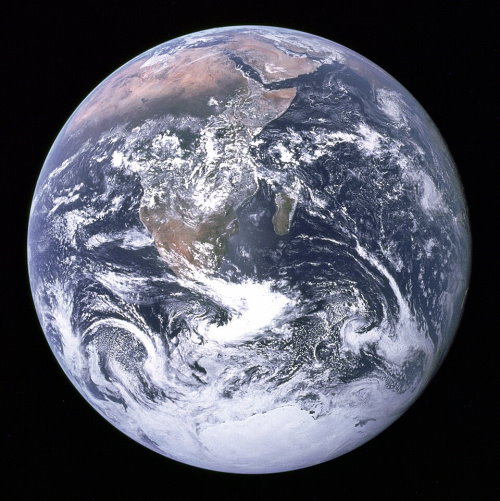
The Blue Marble, taken by Harrison Schmitt of the Apollo 17 crew in 1972. The original photograph was taken with the South Pole facing the top; however, this version is the most widely distributed.
In 1972, the Apollo 17 crew shot the emblematic picture of our Blue Marble, our blue planet’s surface made up to 71% of the ocean, the largest connected ecosystem, accounting for some 99% of the living space by volume. With an estimated more than two million species and its role as regulator of the climate and producer of more than half the oxygen in the atmosphere, not to mention its role in food provision, commerce, employment and recreation, the ocean is fundamental for life on Earth and for human civilisations.
Ably curated by Katharina Chrubasic and Agnieszka Lulińska, and generously supported by scientific cooperation partner GEOMAR Helmholtz Center for Ocean Research in Kiel, the exhibition offered an attractive blend of marine science and exploration from early beginnings to today, the use of marine resources and their protection, and arts, adventure and myths about the seven seas.
Already back in the 1960s Elisabeth Mann Borgese cautioned: “We need to save the ocean, if we want to save ourselves”. So the exhibition is even more relevant today in a period of advanced threats to marine ecosystems from excessive extractions, pollution, climate change effects, and growing social and economic inequality.
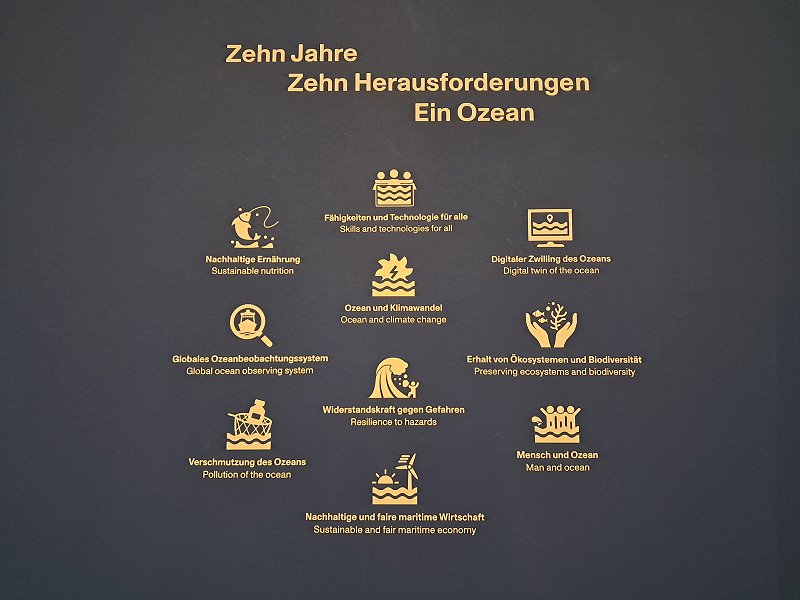
Think also of the half time of the UN Ocean Decade from 2021 to 2030 – 10 years, 10 challenges, 1 ocean – and you have an excellent framing for the exhibition ‘Expedition Weltmeere’ at the Bundeskunsthalle in Bonn.
In the following, the very few pictures give a fleeting impression of the different sections of the show: From splendid pictures to museum samples of fish and to amazing glass models of delicate organisms from the deep sea artfully produced by the father and son team, Blaschka. Each piece is a wondrous reminder of how much we still need to learn about the ocean. Below is a picture of Phronima sedentaria, a crustacean known also as the ‘super mum’ because of the way the species protects her offspring.
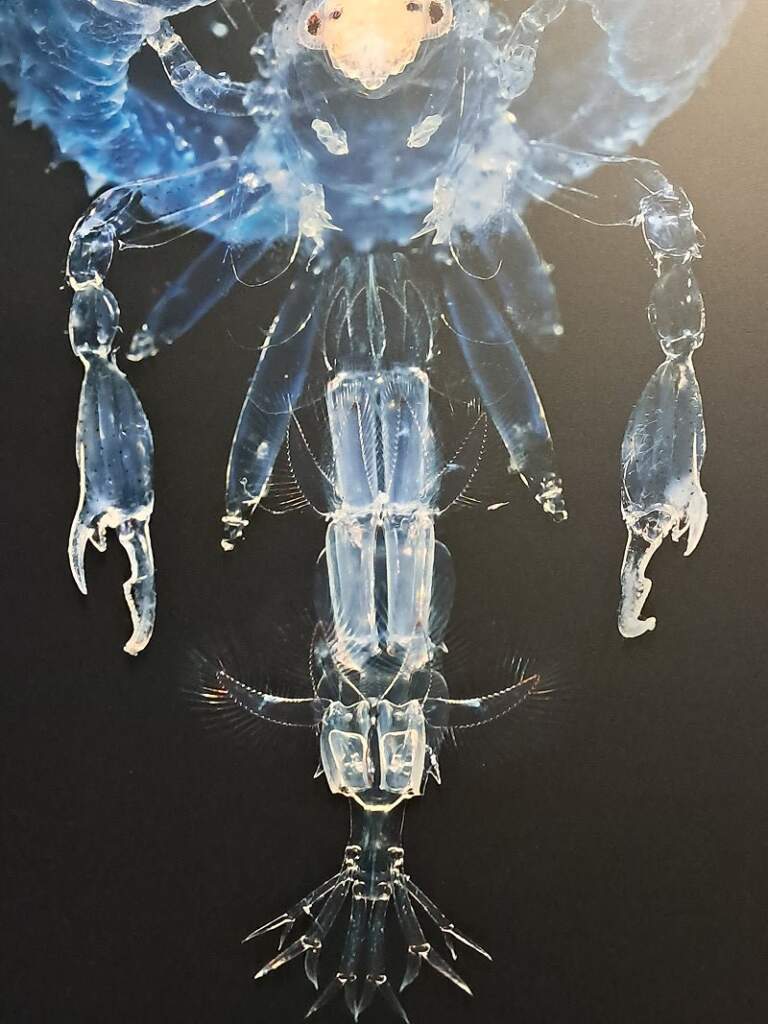
Phronima sedentaria is a deep sea amphipod, a crustacean that can reach 6 cm in length. She empties a salp for the protection of her offspring, pushing them along in this ‘pram’.
Conversely, in the light flooded upper reaches, Palmaria palmata is common in the tidal and intertidal northern coasts of the Atlantic and Pacific. It has been used as a snack for centuries in many places.
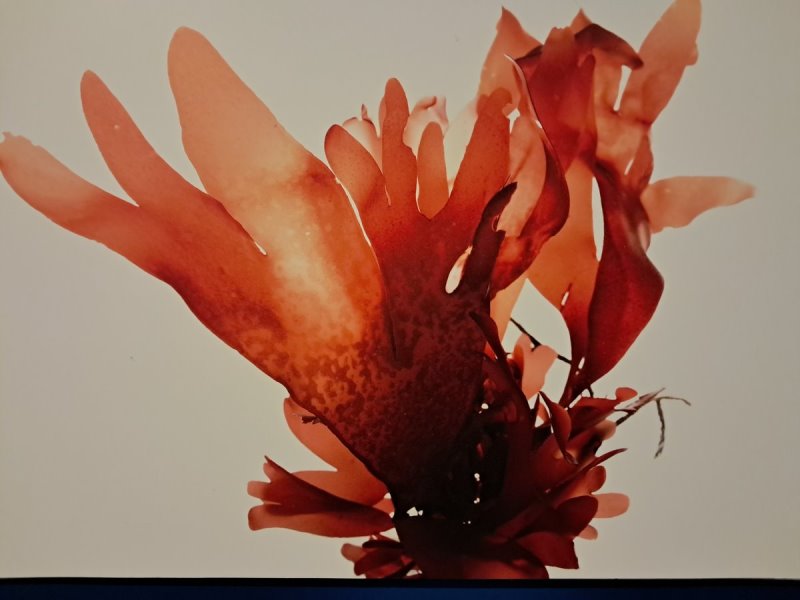
Palmaria palmata, or commonly called dulse, is a red algae in the tidal zone in temperate and cold waters
Wandering through the exhibition spaces, one can not but remain in awe about the courageous and curious people who have contributed to building what we know of the ocean so far, accumulating observations, stories and innovations, though the more we explore with modern means, the more we realise how much remains to be patiently and attentively studied, documented and shared.
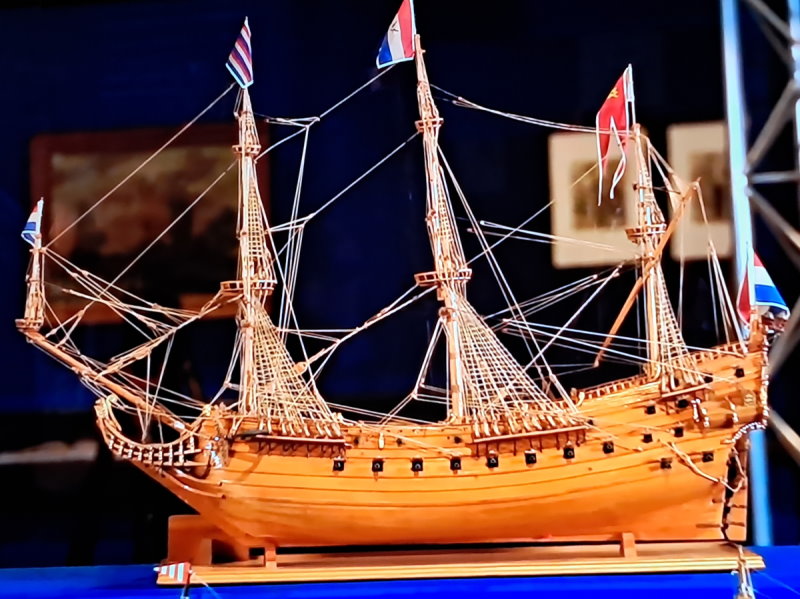
Historical sail ship
The conditions on historical sail ships bear no comparison with a modern research vessel or a huge container ship plying the ocean supported by powerful engines and satellite navigation.
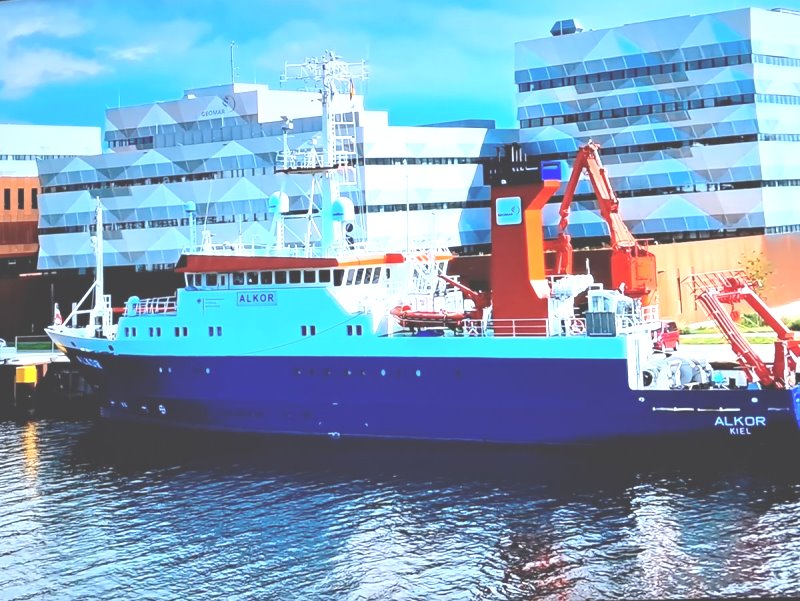
Research vessel Alkor at the pier of GEOMAR, Kiel
The ocean has always stimulated the imagination and a range of feelings from fear and awe to curiosity and joy. Its sheer endless expanses instill amazement still today, despite the technological means we have at our disposal. We have realised painfully late that its resources are not endless and inexhaustible as believed until less than a century ago. Today, the imperative is to make the ocean healthy and bountiful again.
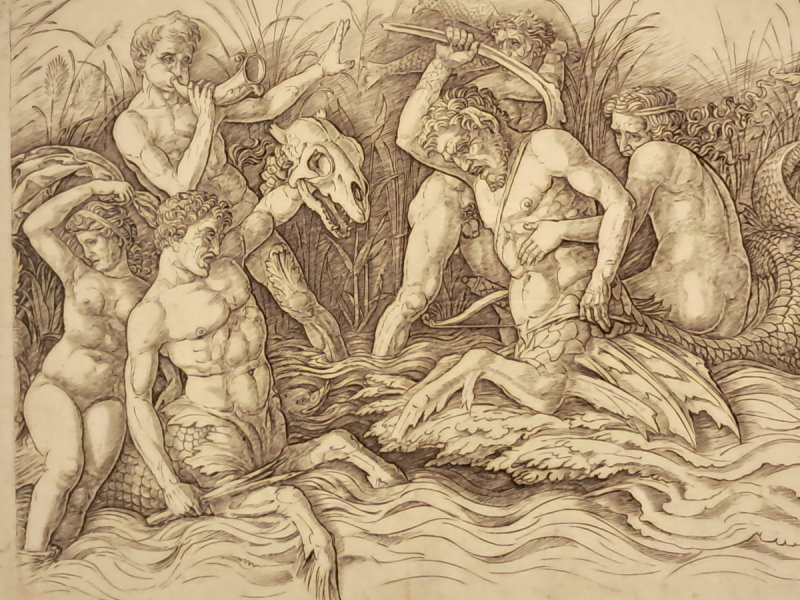
Marco Angelo Del Moro, 16th century: The Triumph of Neptune
The damage we have already inflicted on the ocean can be seen in the near extinction of our cousins, the whales. Since human activities create extinction risks for many marine species. We can thus not sit idle, just mourn or look the other way. It’s not the gods fighting over the maritime realm as was perhaps believed in ancient times. Most of the current ills stem from our lack of responsible stewardship commensurate with the outstanding means we have. We need to study, to understand, to help the ocean to regenerate. The exhibition displayed also how arts can encourage greater consciousness and action.
To draw attention to the coral bleaching of the Great Barrier Reef in a warming ocean, for example, Australian-American artists and scientists Margaret and Christine Wertheim launched the installation art project ‘The Hyperbolic Crochet Coral Reef‘ in 2005. For many years they have encouraged people from all over to imitate the amazing diversity of coral reef organisms in the form of crochets. More than 40 large size installations are the result of this large collaboration.
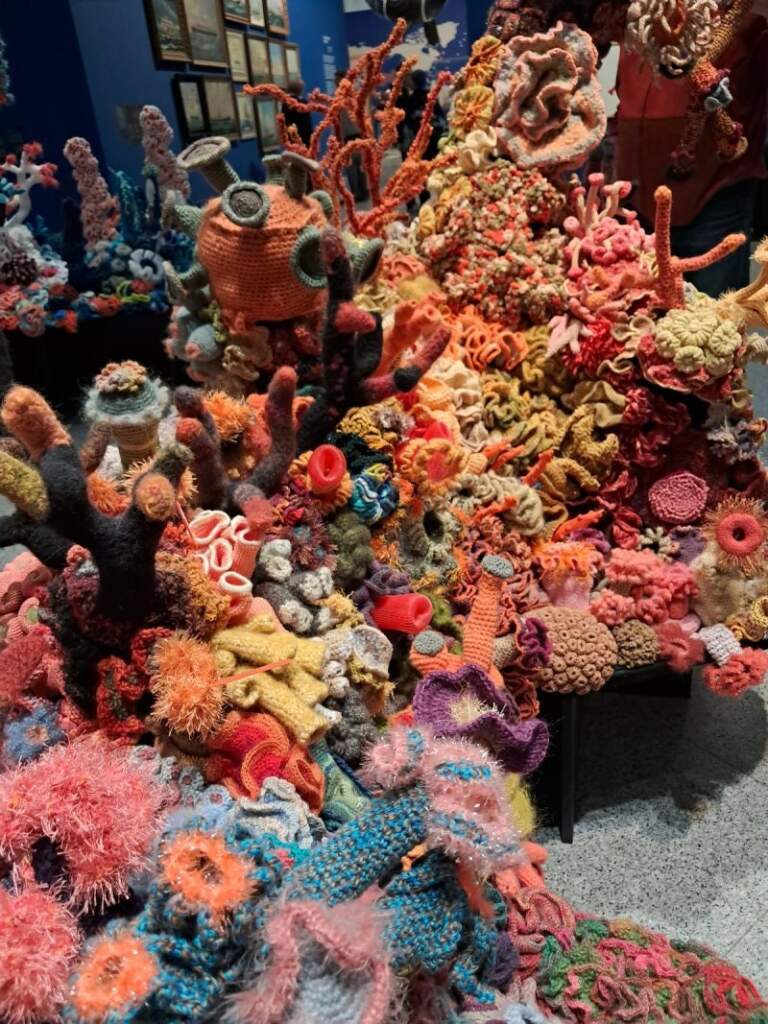
Coral reefs grow through millions of collaborating polyps and other organisms – the landscape in crochet form from the Museum Frieder Burda, Baden-Baden is also the result of large-scale cooperation
The exhibition opened already on 2 October 2025 and is coming to an end on 6 April 2026, offering a final fireworks of workshops and guided tours. It contrasts the first descent into the Mariana Trench by Don Walsh and Jacques Piccard in 1960 with “Twenty Thousand Leagues Under the Seas” (French: Vingt Mille Lieues sous les mers) by French poet and science fiction writer Jules Verne almost a century earlier. Visitors were surprised to discover that Atlantic salmon – a staple in European cooking – can reach 150 cm in nature. Our FishBase Guide app is a great tool to find out the maximum size of your local fish anywhere in the world and when they start reproducing. So you ensure you are not eating babies. In brief, the exhibition offered a wide range of entry points for kindling curiosity about the Ocean and encouraging engagement. For all those interested in knowing more about the ocean and its impact on our culture, the stories, the sciences, the richly illustrated magazine provides additional context, explanations, musings and background. It remains available. Source: Kunst- und Ausstellungshalle der Bundesrepublik Deutschland. Expedition Weltmeere. Magazin zur Ausstellung. 2025. Hirmer Verlag. 193 S. ISBN 9-783777-446820.
Download the FishBase Guide app here directly.
Impressions and pictures by C.E. Nauen, March 2026