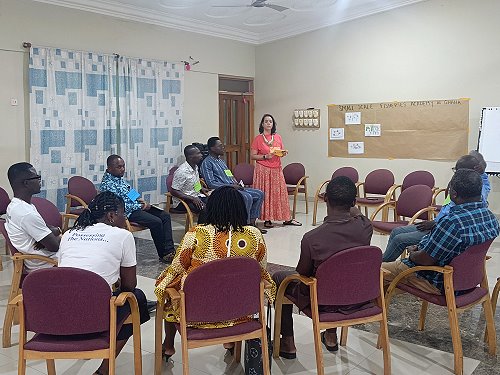
Training the national facilitation team with Maria Fernanda Arraes as Mundus maris chief facilitator and Anthony Kutu Acheampong as co-facilitator
What happens when fishers and fishworkers from across Ghana come together—not simply to learn, but to become facilitators of change in their own communities?
From 29 June to 3 July 2026 in Winneba, Ghana, Mundus maris supported the beginning of an exciting journey together with small-scale fishers in the country. The journey started with the practical preparations for national trainer-facilitators, most of the Canoe and Fishing Gear Owners Association of Ghana.
A day later, the full training started. Thirty-four women and men from Ghana’s four coastal regions gathered for the inaugural workshop of the Small-Scale Fisheries Academy (SSF Academy).
They arrived with diverse experiences from landing beaches, fishing communities, local organisations, and regional staff of the Fisheries Commission.
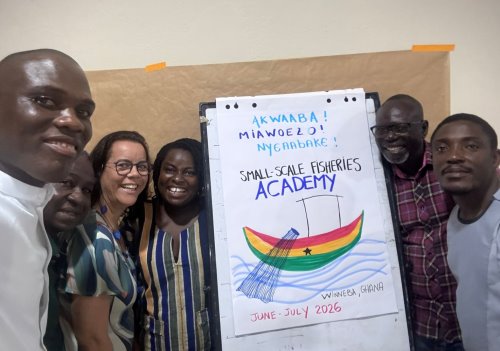
Ready To Go and receive the future regional trainer-facilitators: Nana Kweigyah, Anthony K. Acheampong, Maria Feranda Arraes, Jennifer Apoh-Sam, Wisdom Pazzy, and Kenneth Arthur
They left with a shared mission: to help shape a more sustainable future for Ghana’s small-scale fisheries.
But this was never going to be just another training workshop.
It marked the launch of a year-long partnership between Mundus maris asbl and the Canoe and Fishing Gear Owners Association of Ghana (CaFGOAG), built on one simple conviction:
Communities are not just beneficiaries of fisheries management—they are essential partners in making it work.
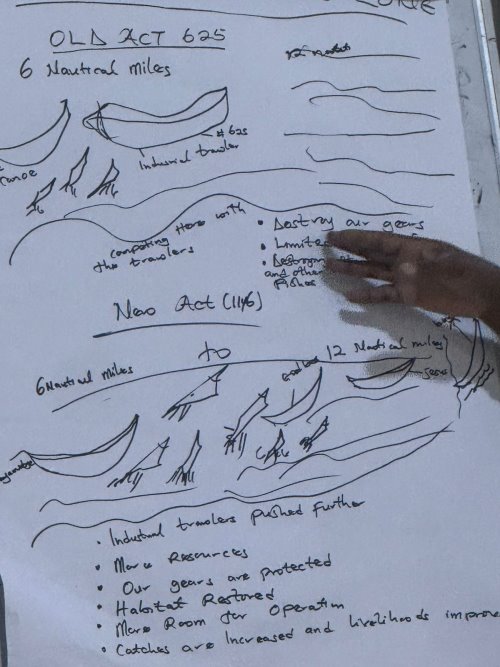
Comparison between the previous and new Fisheries and Aquaculture Act
Why now? Ghana’s fisheries are at a critical moment.
Years of overfishing and Illegal, Unreported and Unregulated (IUU) fishing have significantly reduced fish stocks, threatening food security, livelihoods and the resilience of coastal communities.
Today, Ghana imports approximately 80,000 tonnes of fish each year to help meet national demand in a country, where fish is the dominant source of protein intake in the diet.
At the same time, important reforms are underway.
The Fisheries and Aquaculture Act, 2025 (Act 1146) provides a strong legal foundation for reducing fishing pressure, combating illegal fishing, establishing Marine Protected Areas, and strengthening fisheries co-management.
The Ministry of Fisheries and Aquaculture and the Fisheries Commission as its principal operational agency are spearheading these efforts.
They entail an explicit provision of co-management with the professional organisations of major groups in the sector and the fishing communities concentrated along the coast and the Lake Volta area and its tributaries.
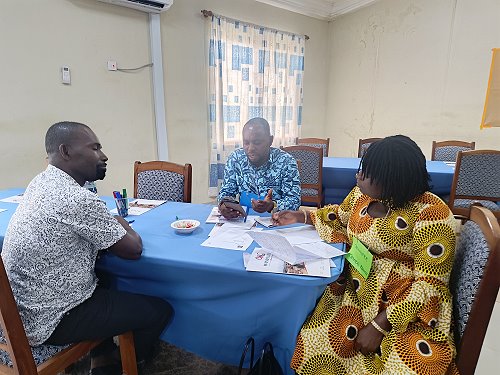
Group work as part of active learning
Opening towards co-management means changing gear in governing the sector compared to the past with emphasis mostly on top down approaches.
That represents an important step towards rebuilding Ghana’s fisheries as all groups will have to engage with the new law.
It is well understood that legislation alone cannot restore fisheries. Real change happens when communities understand the law, trust the process, and have opportunities to work together to develop practical solutions.
That is where the SSF Academy comes in.
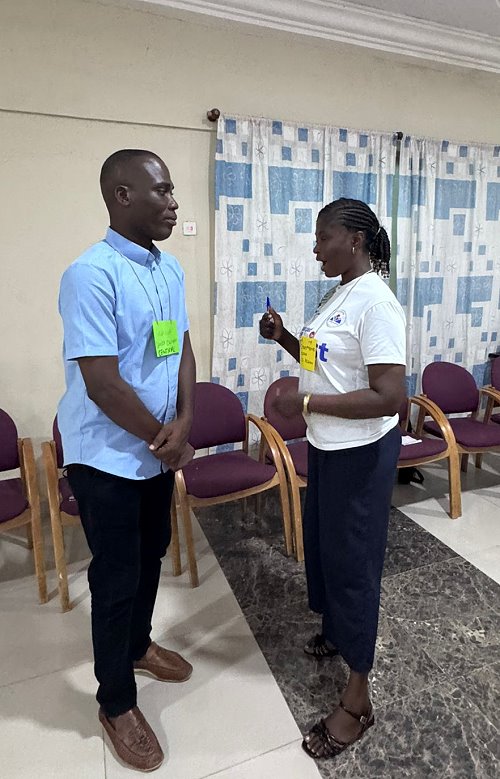
Learning by doing
From participants to facilitators
During the workshop, participants strengthened their facilitation, leadership and dialogue skills through highly visual and participatory learning methods that encourage reflection, collaboration and peer learning.
Over the coming year, they will facilitate regular dialogues in their communities.
Their role will be to create spaces where chief fishermen, canoe owners, fish processors, traders, women, young people and other fish workers can come together to discuss local challenges, identify solutions and strengthen collaboration for local action.
These conversations will not stop at the community level.
The ideas and priorities emerging from these monthly dialogue platforms can help inform the Ministry and the Fisheries Commission, creating stronger links between local experience and national fisheries governance.
Building on existing momentum
The Academy also builds on recent initiatives that introduced approximately 300 fisher leaders and community representatives to the new Fisheries and Aquaculture Act. This important awareness raising effort was delivered by the Africa Centre of Excellence in Coastal Resilience, University of Cape Coast, with support from @Blue Ventures Conservation.
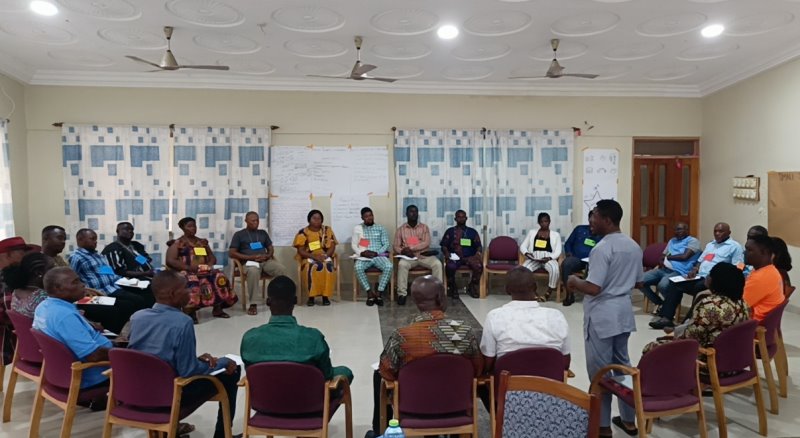
Experienced fishers, fish processors, traders, and others from the four coastal regions came together in the SSF Academy, including regional officers of the Fisheries Commission, a specialist from the Ministery and visitors from Winneba University of Education
The next step is turning essential awareness into action. By strengthening local facilitation and encouraging continuous community dialogue, the SSF Academy seeks to make co-management a living practice—not simply a policy objective.
Learning by Doing: Dialogue, Drawing up plans and Action
One of the most inspiring aspects of the Academy is its learning approach. By combining local, traditional and scientific knowledge with peer learning, visual thinking and participatory facilitation, the Academy creates an environment where participants learn from one another as much as from the training itself.
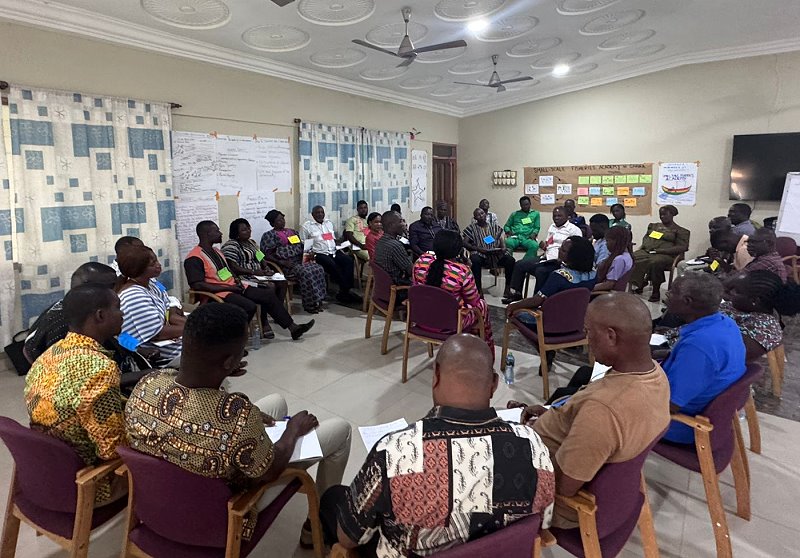
The fish bowl exercise lets participants observe and learn from specific experiences of others
Throughout the five days, the Academy adopted highly participatory methodologies inspired by Visual Facilitation, the Participatory Action Learning System (PALS) and Social and Behaviour Change Communication (SBCC). Together, these approaches encourage participants to learn by doing, drawing and reflecting; analyse their own realities; define shared goals; and identify collective actions through visual tools, facilitated dialogue and peer exchange.
Rather than being passive recipients of information, participants actively explored real-life challenges. They reflected individually and collectively, worked in regional and mixed groups, shared personal experiences, questioned assumptions, analysed community realities, and practised facilitation techniques that they will later use in their own communities. The Academy is also not simply delivering a one-off workshop. Instead it adopts a training-of-trainers approach designed to create a network of national and regional facilitators capable of supporting regular dialogue and learning within fishing communities.
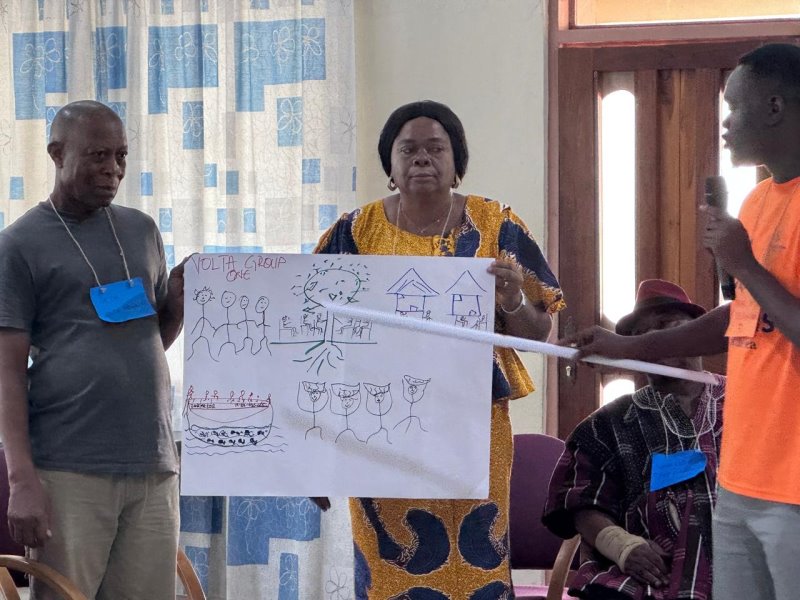
A vision and concrete planning for turning the vision into operational implementation steps
This learning-by-doing approach strengthens not only knowledge and facilitation skills, but also the confidence, ownership and relationships needed to sustain collective action beyond the Academy workshops.
The Executive Director of the Fisheries Commission, Benjamin B. Campion, attended the last day of training for the regional trainer-facilitators. After observing the regional facilitators in action, he expressed interest in expanding the training approach to Fisheries Commission staff, recognising the Academy as a valuable mechanism for strengthening collaboration, capacity development, and the implementation of sustainable fisheries management in Ghana.
A shared responsibility
Restoring Ghana’s fisheries cannot be achieved by government alone.
Nor can it be achieved by fishing communities working in isolation.
It requires partnerships that connect communities, government institutions, researchers, universities, civil society organisations, traditional authorities and development partners around a common purpose.
The SSF Academy is one contribution to building those connections.
Its success will ultimately be measured not by the number of workshops delivered, but by the conversations that continue in fishing communities, the trust that grows between stakeholders, and the collective actions that help restore Ghana’s fisheries for future generations.
A new chapter on the journey has begun. We in Mundus maris look forward to learning alongside communities and partners and continue our technical and methological support as this new chapter unfolds. We actively encourage other organisations to join the journey and bring their complementary competencies, experiences, and other resources to bear towards the success of this real life co-management commitment.
See here the policy brief, a short video, and some voices from the national media:
SSF Academy launched to empower Ghana’s small-scale fishers in coastal governance
“Fisheries management is facilitation”— FC Boss backs new SSF Academy to empower coastal communities
Joy News: Fisheries Commission intensifies enforcement of new fisheries regulations
Community-led fisheries management key to restoring declining fish stocks — Fisheries Commission
Small-Scale Fisheries Academy
- Mundus maris presents the SSF Academy in Ghana at the 3rd SSF Summit in Rome
- Restoring Ghana’s fisheries starts with the people who depend on them
- Small-Scale fisheries should be a big part of the future in West Africa
- Plunder in the Atlantic: When Overfishing Threatens the Sea and Coastal Communities
- Our Power, Our Planet – Celebrating Earth Day Webinar
- Mundus maris at EGU26, 3-8 May 2026
- Mundus maris at the aspirational 5th World SSF Summit, Thailand
- Turning a water pest into a source of income
- SSF and Environmentalists rethink fisheries together
- Make Fishing Fair
- Foreign overfishing fuels Senegal’s deadly migration crisis to Europe
- Mundus maris at MARE 2025
- Small-scale fishers at the center of ocean governance and food security
- Make Fishing Fair in the EU, 25 March 2025
- Human – Biodiversity Relationships Across Scales
- World Fisheries Day, 21 November 2024, celebrated in Nigeria
- Mundus maris participated in the 2024 World Fisheries Day organized by Canoe and Fishing Gear Association of Ghana (CaFGOAG).
- Mundus maris contribution to the UNOC3 public consultation
- Small-Scale Fisheries Summit in Rome, 5-7 July 2024
- Regional Symposium on European Small-Scale Fisheries, Larnaca, Cyprus, 1-3 July 2024
- Baltic Fisheries Emergency Meeting, Brussels, 26 June 2024
- Ambivalent role of Market and Technology in the Transitions from Vulnerability to Viability: Nexus in Senegal SSF
- Shell fisheries as stewardship for mangroves
- World Fisheries Day, 21 November 2023
- Webinar: Nigeria’s Fisheries challenges and opportunities
- Presenting the FishBase app at the Symposium in Tervuren
- MARE Conference on Blue Fear – Mundus maris reflects
- The Transition From Vulnerability to Viability Through Illuminating Hidden Harvests, 26 May 2023
- EGU sessions focused on geoethics and joint learning, 23-28 April 2023
- Solidarity with artisanal fishers in Senegal and Mauritania
- The legal instruments for the development of sustainable small-scale fisheries governance in Nigeria, 31 March 2023
- Tools for Gender Analysis: Understanding Vulnerability and Empowerment, 17 February 2023
- Community resilience: A framework for non-traditional field research, 27 January 2023
- Sustainability at scale – V2V November webinar
- African edition of 4WSFC in Cape Town, 21 to 23 November 2022
- European edition of 4WSFC in Malta, 12-14 September 2022
- Mundus maris contributes to SSF Summit in Rome
- Women fish traders in Yoff and Hann, Senegal, victims or shapers of their destiny?
- The Academy continues its work in Yoff
- Illuminating the Hidden Harvest – a snapshot
- Virtual launch event FAO: International Year of Artisanal Fisheries and Aquaculture
- The Small-Scale Fisheries Academy as a source of operational support to PA Guidelines
- World Fisheries Congress, Adelaide, 20-24 September
- Mundus maris supports the fight of Paolo, the fisher, in Tuscany, Italy
- Catching-up – SSF Academy Yoff, 27 Febr. 2021
- Strengthening capacities of the actors for sustainable small-scale fisheries
- Testing training methods during the pilot phase of the SSF Academy in Senegal
- A premiere – launch of a Small-Scale Fisheries Academy in Senegal