


The EGU Assembly puts geoethics again on the agenda
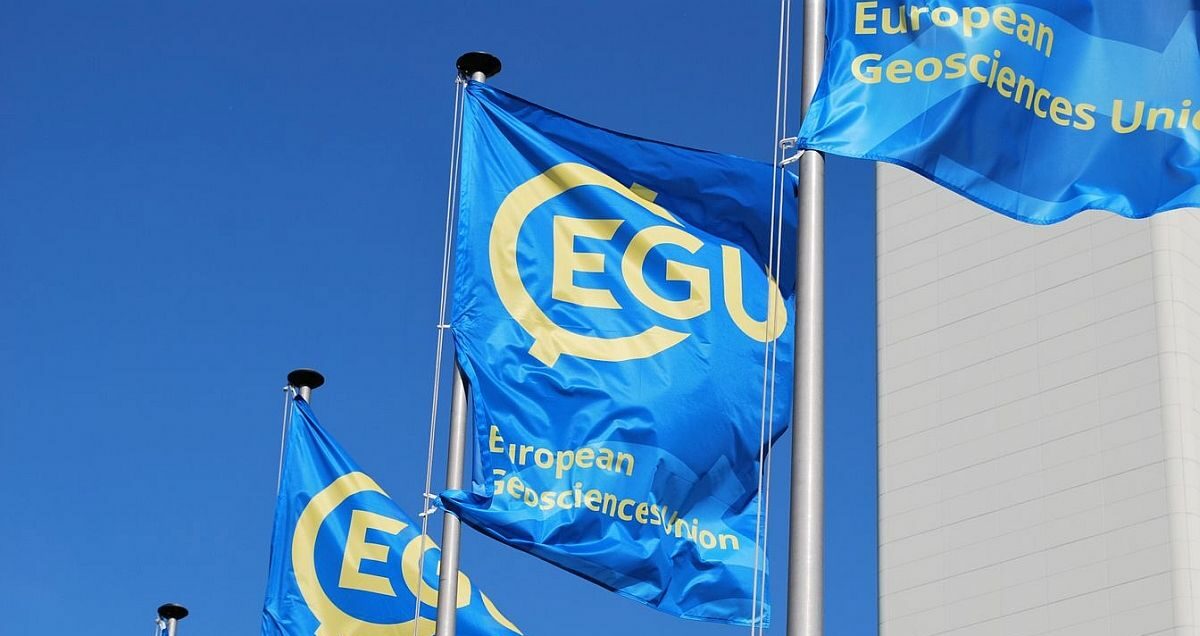 The annual Assembly of the European Geosciences Union takes regularly place in Vienna because of the huge conference facilities at the Austria Center Vienna able to accommodate the many participants, usually upwards of 10,000. The 2024 edition took place 14-19 April. As in previous years, Mundus maris contributed a presentation to the stream of research work sponsored by the International Association for the Promotion of Geoethics (IAPG). This year's main session was convened by Silvia Peppoloni with co-conveners Svitlana Krakovska, Giuseppe Di Capua, and David Crookall under the title "Geoethics: The significance of geosciences for society and the environment".
Eco-Teens Day in Brussels
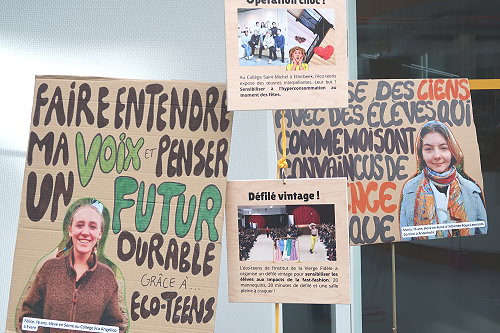 Invited by COREN, Comprendre et Agir pour l'Environnement asbl (Understand and take action for the environment), Mundus maris participated in the inspiring Eco-Teens Day in Brussels on Friday, 12 April 2024. Some 180 secondary school students from 16 schools in Brussels showcased what concrete environment friendly activities they had carried out throughout the school year ending soon. An exhibition space showcased their demands for more youth involvement in environment protection.
Take home from EU Ocean Days, Brussels, 5 to 8 March 2024
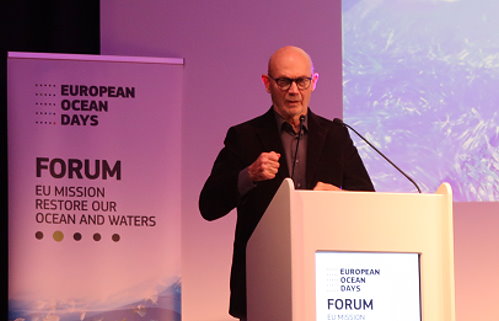 The mission approach, which the European institutions have taken, is intended to meet major societal challenges by facilitating the mobilisation of many actors doing transdisciplinary work and combining a wide range of funding instruments from European to local levels. The second Mission Forum on 5 March, opened by mission board chair Pascal Lamy, showcased that beyond wonderful aspirations, real action and highlights on change was on the agenda. The entire week was packed with presentations and networking with a strong presence of engaged women leaders not shy to go where it mattered. Here are some impressions from the events.
Where skies and seas meet: Climate and ocean interdependence in policy making
 Over the last 50+ years, the International Ocean Institute (IOI) has been conducting training and capacity building in Ocean Governance with the aim of creating knowledgeable future leaders. Founded by Professor Elisabeth Mann Borgese in 1972, IOI is a globally acting, independent, non-governmental non-profit organisation headquartered in Malta and with offices in all regions of the globe. Here we summarise content from a webinar, convened on 29 February 2024. Speakers made the point that the many global issues were not to be treated as single, almost disciplinary matters. They instisted that it was more goal-oriented to address also the ramifications between issues, whether at the level of the major global treaties, such as the Law of the Sea, the Paris climate agreement or the Convention on Biological Diversity (CBD) and the Sustainable Development Goals (SDGs) or when facing more local management challenges.
.
WTO: we need an ambitious agreement to stop harmful fisheries subsidies
 Since more than 20 years, the WTO has had a mandate to phase out harmful fisheries subsidies. Even after the adoption of the Sustainable Development Goals by the UN General Assembly in 2015 which restate this mandate in target 14.6 explicitly, movement in this direction has been painfully slow. An update in 2019 showed an estimate of fully USD 22 billion being spent by governments to support mostly their long-distance industrial fleets! [1] A large coalition of civil society organisations and public personalities has been arguing for many years now that the time for action is NOW. During a recent briefing in preparation of the forthcoming 13th Ministerial Conference (MC13) in Abu Dhabi (26-29 February 2024) WTO Deputy Director General Angela Ellard reported on progress with the negotiation process. But she also cautioned that unless concrete measures were taken, the global decline of resources would continue unabated.
Microplastic, a public health issue
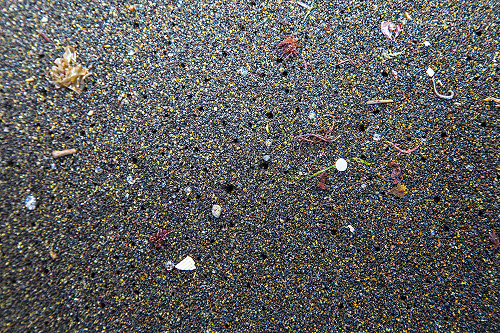 Microplastics are increasingly recognised as a growing public health issue. The research reported here was carried out within the framework of an academic collaboration supported by Mundus maris with the University of Belgrano, Argentina. It aims to document the environmental problems represented by microplastics in aquatic ecosystems, with a particular focus on the Buenos Aires coast of the Río de la Plata. The samples were taken at the Buenos Aires Fishermen's Club.
Mundus maris at Boot 2024 - Great success!
 Beating earlier records, the 'love your ocean' platform to promote the seven principles of the UN Ocean Decade was present with more than 60 partners at the international fair for water sports, Boot 2024 in Düsseldorf, Germany. From 20 to 28 January, Mundus maris teams offered games, discussions, networking. We also supported the FishBase sound quiz of our friends at Quantitative Aquatics. We spoke to as many of the visitors streaming through to Hall 11 as we could, and promoted joining the action for ocean literacy, ocean protection and solidarity with low impact small-scale fishers through the Small-Scale Fisheries Academy.
Belgian Ocean Decade Committee reviews its programme
 Maria del Carmen Patricia Morales represents Mundus maris asbl in the Belgian Ocean Decade Committee. The Committee which provides scientific guidance met for its last session of the year on December 1, 2023 in the premises of the InnovOcean Campus linked to the Flanders Marine Institute (VLIZ) in Oostende. VLIZ is a Decade Implementing Partner (DIP) and provides the chair and secretariat of the Belgian Ocean Decade Committee (NDC-BE).
UN Special Rapporteur on the right to food
 Hunger and food insecurity are widespread problems. According to the State of Food Security and Nutrition in the World (2019), more than 820 million people in the world were still hungry in 2018. This problem is likely to get worse given the expected increase in the world’s population and the stress on natural resources in times of unsustainable industrial fisheries and agriculture. Michael Fakhri is a professor at the University of Oregon School of Law where he teaches courses on human rights, food law, development, and commercial law. He is the current UN Special Rapporteur, focusing on the right to food and securing sustainable small-scale fisheries. He reports to the Human Rights Council and has asked for inputs by end November 2023.
World Fisheries Day, 21 November 2023
 World Fisheries Day is celebrated every year on 21 November around the globe. This year's motto focused on social sustainability and working conditions in the fisheries sector. The idea of World Fisheries Day originated in 1997 at the World Fisheries Forum in New Delhi, India. It was proposed by a group of supporters of small-scale fisheries and environmentalists who recognized the need to raise awareness about the importance of fisheries and the challenges they face. Since World War II, subsidy driven overcapacity in industrial fishing fleets has led to sequential overfishing and expansion into the last corner of the ocean contributing to mass species extinction and declining catches.
International Panel for Ocean Sustainability (IPOS)
 The ocean is under siege from multiple human activities. Recognised as global commons, the One Ocean Summit in Brest, France, in 2022 marked its ascendence on the global political agenda. The second UN Ocean Conference in Lisbon last year called for the establishment of an International Panel for Ocean Sustainability (IPOS) in order to replace technocratic and fragmented approaches towards the ocean by more comprehensive, transdisciplinary, more inclusive understanding and a much improved science-policy interface to help deliver on Sustainable Development Goal 14 'Life Under Water'. Following the invitation of the EU Council, the European Commission (DG MARE) commissioned the Seascape Assessment, to demonstrate the feasibility of the IPOS.