 Würden Sie an das Meer denken, wenn Sie an Hilden in der Nähe von Düsseldorf denken? Wahrscheinlich nicht, doch während der Trias, vor etwa 251,9 bis 201,3 Millionen Jahren, reichte die Nordsee gelegentlich bis in das heutige Niederrheingebiet hinein, wie Kalkablagerungen aus Muschelschalen belegen.
Was in den letzten rund 8000 Jahren übrig geblieben ist, sind die Niederungen der „Kölner Bucht“ mit ihrem milden Klima, das vom Golfstrom profitiert. So macht sich das Meer auch heute noch einige hundert Kilometer landeinwärts bemerkbar. Ein Grund mehr, den Freiwilligentag in der Stadt zu nutzen, um mehr Interesse an einem gesunden Meer zu wecken.
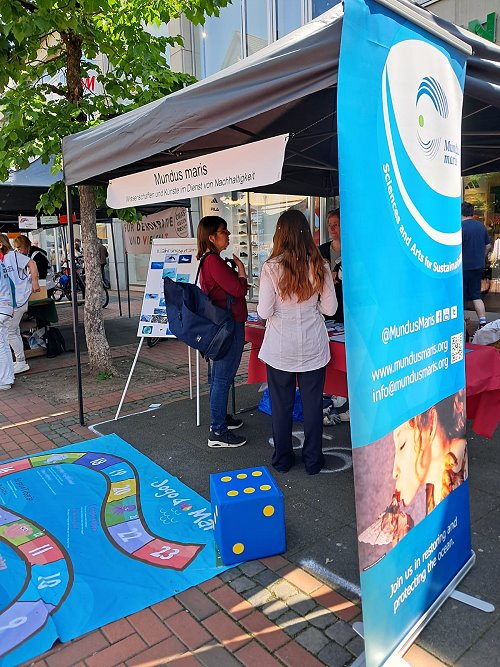
Mit einem vierköpfigen Team besetzte Mundus maris seinen Informationsstand und bot hierzu spielerische Ansätze durch das Ozeanquizz mit kleinen Preisen für erfolgreiche Durchgänge an. Eine Biologiestudentin unterstützte zudem die bebilderte Rekonstruktion von Nahrungsnetzen im Meer.
Zahlreiche junge Leute wollten ihr Wissen darüber testen, wer im Ozean wen frisst und welche konkreten Folgen es hat, dass nur etwa 10 % der Energie oder Biomasse einer niedrigeren trophischen Ebene im Nahrungsnetz auf die nächsthöhere Ebene übertragen werden.
Das erklärt, warum Orcas (Orcinus orca) oder andere große, langlebige Raubtiere nur in relativ geringer Zahl existieren können. Es steht einfach nicht genug Biomasse zur Verfügung, um eine große Population zu ernähren.
Umgekehrt müssen riesige Tiere wie große Bartenwale, beispielsweise ein Buckelwal (Megaptera novaeangliae), der eine Länge von 18 m und ein Gewicht von 35 Tonnen erreichen kann, oder ein Walhai (Rhincodon typus – 20 Tonnen), sich für das Erreichen einer solchen Größe auf niedrigen Stufen der Nahrungspyramide ernähren, um genügend Futterorganismen zu finden.
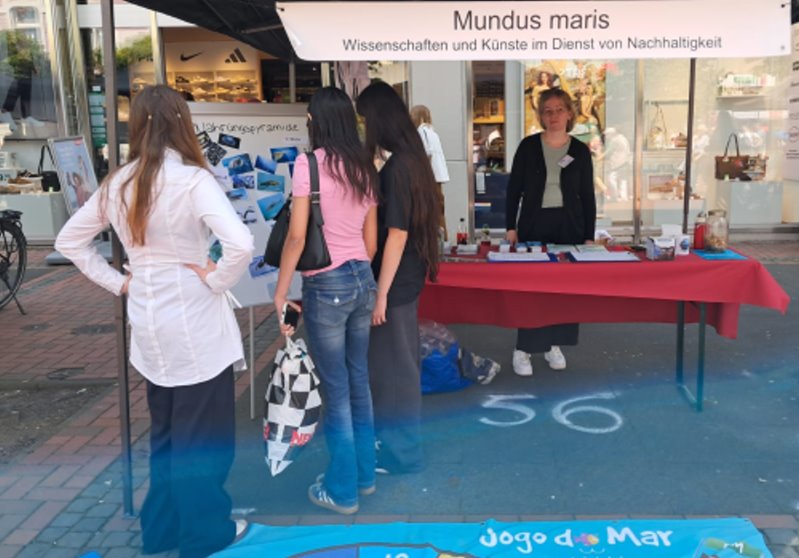
Meeresnahrungsnetz – zur eigenständigen Konstruktion – alles verstanden?
Zahlreiche junge Leute ließen sich dazu bewegen, ihre Fähigkeiten auf die Probe zu stellen. Ganz unten in der Nahrungskette stehen die kleinsten Organismen – allerdings in enormer Zahl. Wunderschönes Phytoplankton, teilweise mit bizarren Formen, mikroskopisch kleine Kügelchen oder große Fäden, sowie andere Pflanzen sind die einzigen Produzenten, die die Energie des Sonnenlichts durch Photosynthese in organische Substanz umwandeln.
 Vor allem in den oberen 60 Metern des Ozeans, soweit das Sonnenlicht vordringt, produzieren sie etwa die Hälfte des Sauerstoffs in der Atmosphäre und erhalten alles andere Leben im Nahrungsnetz. Wir alle sind darauf angewiesen, dass ihr Stoffwechsel gut funktioniert.
Viele Passanten nahmen unsere Flyer, Lesezeichen und Visitenkarten für die FishBase Guide-App mit. Am Ende des Tages war unser Vorrat deutlich geschrumpft – umso besser.
Wir nutzten die Gelegenheit auch, um die Aufmerksamkeit der Menschen auf den bevorstehenden Weltozeantag und die geplante Säuberungsaktion an einem örtlichen Bach zu lenken. Eine wiederkehrende Aktion, bei der alle Arten von Müll gesammelt werden, wobei Zigarettenkippen zahlenmäßig am häufigsten vorkommen.
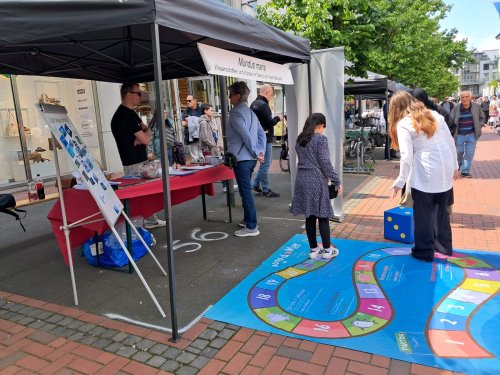
Während der vier Stunden der Veranstaltung war die Fußgängerzone voller Menschen, die die Sonne genossen und sich über die vielfältigen ehrenamtlichen Initiativen informierten. Wir hatten keine Minute Zeit zum Verschnaufen. Mission erfüllt – viele gute Gespräche und eine Vereinbarung mit dem Jugendparlament zur Entwicklung einer Zusammenarbeit.