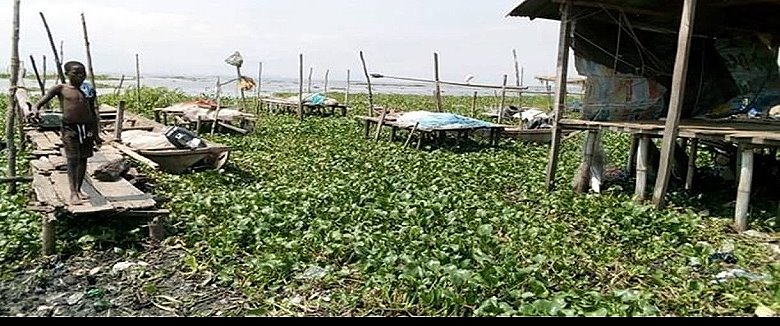
On February 26, 2026, the Lagos State University (LASU), Centre of Excellence for Sargassum Research (CESAR), in partnership with Mundus maris, hosted a high-impact workshop dedicated to transforming environmental challenges into economic opportunities. The event focused on the sustainable conversion into marketable resources of Water Hyacinth and Sargassum seaweed, invasive species that typically hinder fishing and other maritime activities.
The workshop venue in the S.L. Edu Science Hall & CESAR Building, on the LASU Main Campus in Ojo was accessible to students, researchers, and interested people from nearby villages. Participation of the day-long workshop was free and attracted 68 people, including the facilitators and organisers.
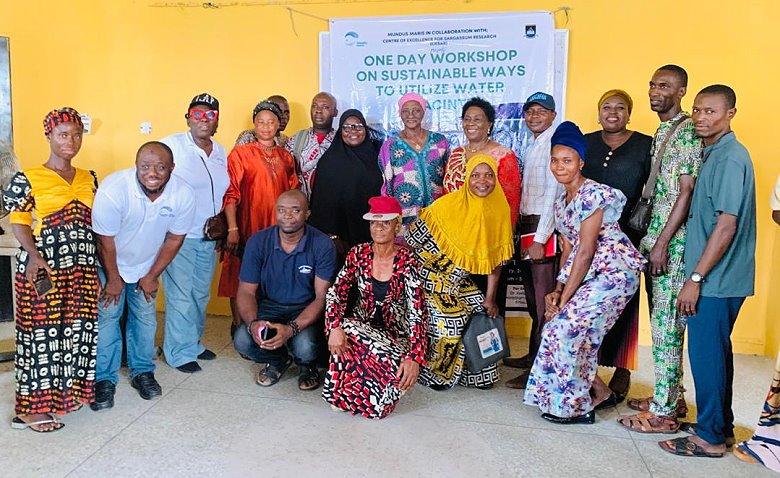
Epe farmers from nearby with organisers
The workshop commenced with a theoretical session featuring prominent stakeholders. Key representatives included the Vice Chancellor’s representative in person of Prof. Tajudeen Abayomi Olumokun, the Dean of the Faculty of Science, in person of Prof. Anthony Babajide Ojekale, the former Dean, Prof. Moses Akanbi, the Chairman of LASCAFAN, Mr. Fajinmi, the Director of CESAR, Prof. Mrs Morenike Adewolu, and Prof. Williams for Mundus maris.
These leaders emphasized the importance of Town and Gown collaboration, where academic research is directly applied to solve community problems. Technical insights were provided by a team of experts, including Mr. Kazeem (Mundus maris), Mrs. Charles (Water Hyacinth craft making specialist), and Dr. Blessing (a CESAR PhD graduate), who outlined the scientific framework for utilizing aquatic biomass.
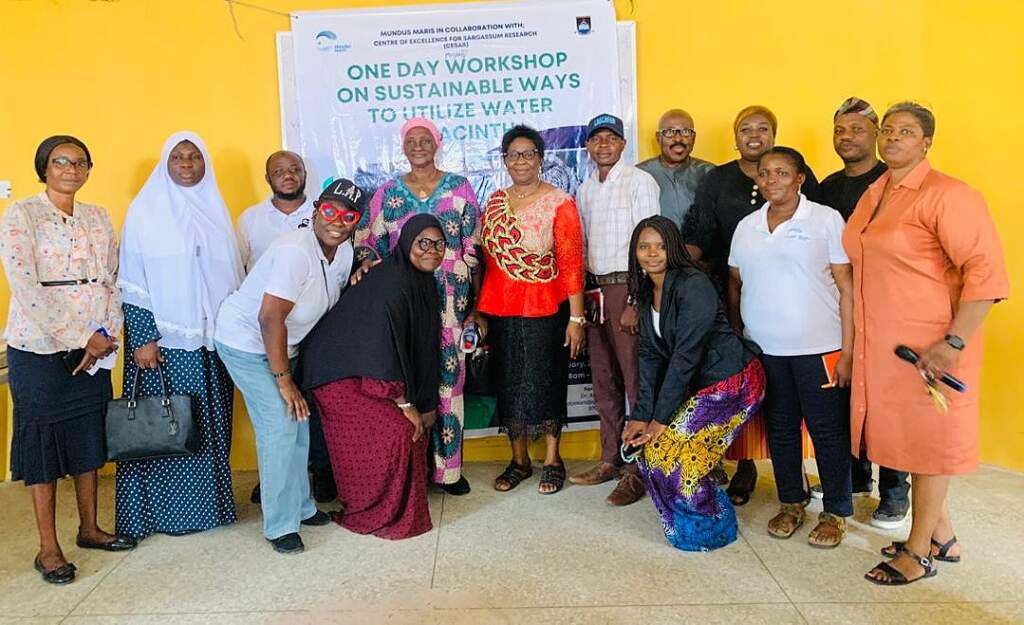
Workshop organisers with the Mundus maris team
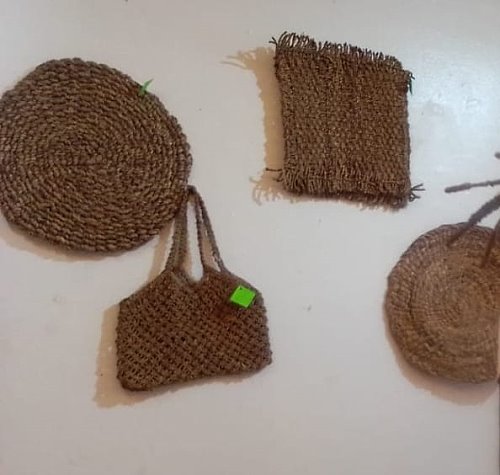 The afternoon transitioned into a practical, hands-on exhibition led by Mrs. Charles and Dr. Badmus.
Participants were guided through the physical processing of raw weeds into high-value goods.
The roots of Water Hyacinth were converted into biochar and briquettes for smokeless fuel.
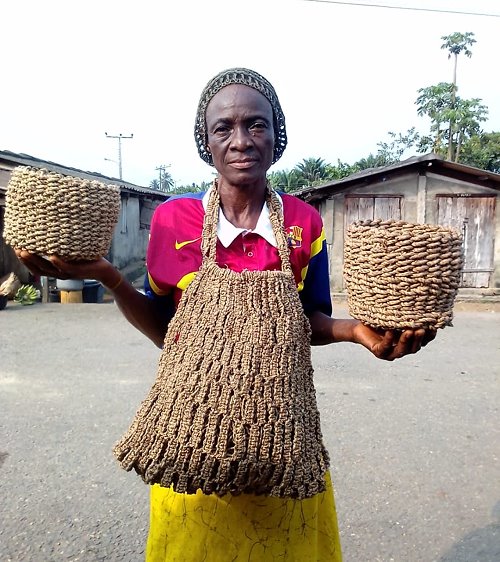
Conversely, under the watchful eyes of Mrs Charles, the stems were treated and woven into hand-crafted bags and decorations.
Simultaneously, Sargassum was processed primarily for livestock feed production, showcasing a viable alternative for the agricultural sector.
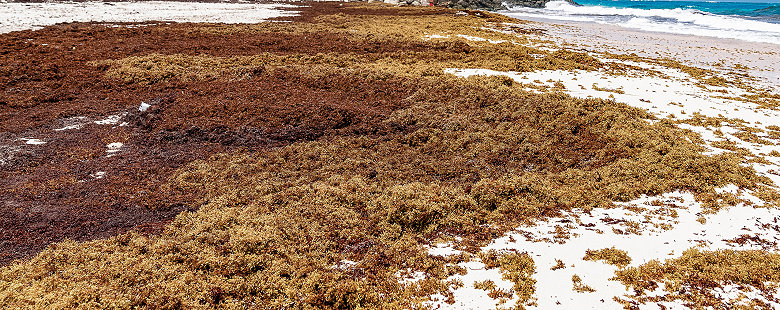
A beach swamped with Sargassum
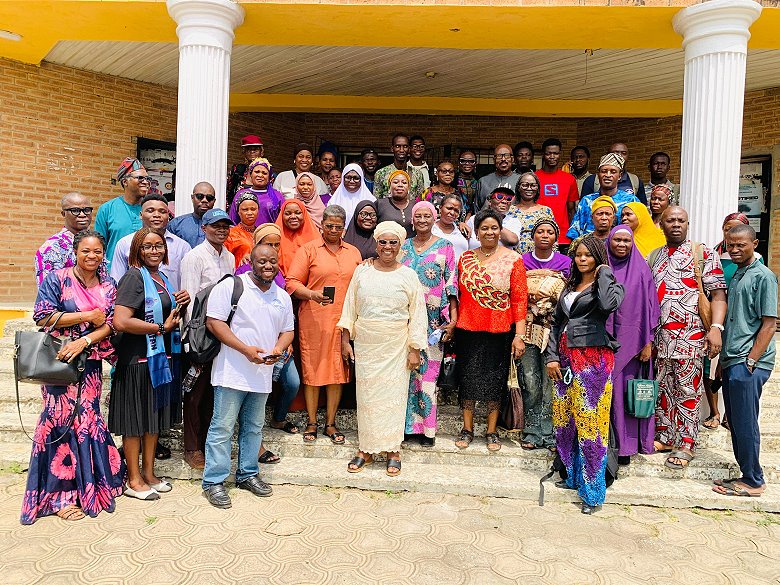
 The workshop achieved significant success, drawing 68 attendees from diverse backgrounds, including students, researchers, and local community members.
The session sparked such high engagement that numerous participants applied for Mundus maris membership on the spot.
Furthermore, various participants representing agencies expressed a strong desire for future collaborations to scale this type of training session to other littoral communities and thus spread the opportunities for additional income more widely.
See another example of robust recipients to the right, shown by a lady from the nearby community and produced during the workshop.
By the end of the day, what before looked like nature’s nuisance was successfully redefined as a sustainable resource for wealth creation and environmental resilience.
Participants grouped together for a ‘family photo’ as a welcome memory of a day spent productively in exchange and joint application of learnt theory.
Text and pictures by Dr. O. Ajelara, Dr. A. Abiodun-Solanke, and Mundus maris Nigeria unless indicated otherwise.
Small-Scale Fisheries Academy
- The SSF Academy convenes the second workshop in Ghana
- Mundus maris presents the SSF Academy in Ghana at the 3rd SSF Summit in Rome
- Restoring Ghana’s fisheries starts with the people who depend on them
- Small-Scale fisheries should be a big part of the future in West Africa
- Plunder in the Atlantic: When Overfishing Threatens the Sea and Coastal Communities
- Our Power, Our Planet – Celebrating Earth Day Webinar
- Mundus maris at EGU26, 3-8 May 2026
- Mundus maris at the aspirational 5th World SSF Summit, Thailand
- Turning a water pest into a source of income
- SSF and Environmentalists rethink fisheries together
- Make Fishing Fair
- Foreign overfishing fuels Senegal’s deadly migration crisis to Europe
- Mundus maris at MARE 2025
- Small-scale fishers at the center of ocean governance and food security
- Make Fishing Fair in the EU, 25 March 2025
- Human – Biodiversity Relationships Across Scales
- World Fisheries Day, 21 November 2024, celebrated in Nigeria
- Mundus maris participated in the 2024 World Fisheries Day organized by Canoe and Fishing Gear Association of Ghana (CaFGOAG).
- Mundus maris contribution to the UNOC3 public consultation
- Small-Scale Fisheries Summit in Rome, 5-7 July 2024
- Regional Symposium on European Small-Scale Fisheries, Larnaca, Cyprus, 1-3 July 2024
- Baltic Fisheries Emergency Meeting, Brussels, 26 June 2024
- Ambivalent role of Market and Technology in the Transitions from Vulnerability to Viability: Nexus in Senegal SSF
- Shell fisheries as stewardship for mangroves
- World Fisheries Day, 21 November 2023
- Webinar: Nigeria’s Fisheries challenges and opportunities
- Presenting the FishBase app at the Symposium in Tervuren
- MARE Conference on Blue Fear – Mundus maris reflects
- The Transition From Vulnerability to Viability Through Illuminating Hidden Harvests, 26 May 2023
- EGU sessions focused on geoethics and joint learning, 23-28 April 2023
- Solidarity with artisanal fishers in Senegal and Mauritania
- The legal instruments for the development of sustainable small-scale fisheries governance in Nigeria, 31 March 2023
- Tools for Gender Analysis: Understanding Vulnerability and Empowerment, 17 February 2023
- Community resilience: A framework for non-traditional field research, 27 January 2023
- Sustainability at scale – V2V November webinar
- African edition of 4WSFC in Cape Town, 21 to 23 November 2022
- European edition of 4WSFC in Malta, 12-14 September 2022
- Mundus maris contributes to SSF Summit in Rome
- Women fish traders in Yoff and Hann, Senegal, victims or shapers of their destiny?
- The Academy continues its work in Yoff
- Illuminating the Hidden Harvest – a snapshot
- Virtual launch event FAO: International Year of Artisanal Fisheries and Aquaculture
- The Small-Scale Fisheries Academy as a source of operational support to PA Guidelines
- World Fisheries Congress, Adelaide, 20-24 September
- Mundus maris supports the fight of Paolo, the fisher, in Tuscany, Italy
- Catching-up – SSF Academy Yoff, 27 Febr. 2021
- Strengthening capacities of the actors for sustainable small-scale fisheries
- Testing training methods during the pilot phase of the SSF Academy in Senegal
- A premiere – launch of a Small-Scale Fisheries Academy in Senegal